

Inline pH & ORP Sensor Fittings and Flow Cells
Every Turtle Tough pH and ORP sensor can be installed inline: choose the inline method when you order. For a sensor you take out to clean and calibrate, use a twist-lock, sanitary tri-clamp or hot-tap fitting rather than threading it in and out, which twists the cable and can damage the connections in the back of the sensor. Twist-lock and tri-clamp fittings need the line isolated to remove the sensor; hot-tap is the only method that works while the line is live.


Choosing an inline fitting
| Fitting | Connection | Pressure | Best for |
|---|---|---|---|
| Inline Twistlock Hardware | Bayonet quick disconnect; 1" MNPT into a 1" FNPT pipe tee | Kynar 50 psig; CPVC or PEEK 100 psig | Fast insertion and removal of 1" twist-lock sensors |
| Quick Release Tri-clamp Inline Sensor Adapter | Retrofits any sensor with a 3/4" MNPT front thread; 2" flange; 316SS | Up to 100 psig | Removing an inline sensor without unscrewing it from the process |
| Inline Sanitary Sensor Holder | Tri-Clover 1.5", 2" or 2.5"; FDA 3A grade 316SS | - | Sanitary processes, with quick-connect plugs for easy calibration and cleaning |
| Inline Front-end | 1 1/4" threaded fitting with hex flats | Recommended above 100 psi | High-pressure or aggressive applications where the sensor needs extra protection |
| Flow Cell | Clear body, tangential inlet, sample valve | - | Side-stream pH and ORP measurement at a constant sample velocity |
| Multi Sensor Stainless Steel Flow Cell | 316SS body | - | Several smart sensors (pH, ORP, turbidity, TSS) on one steady side stream |
| Low Flow Panel | Custom side stream with control of pressure, flow and temperature | Custom | Processes outside the sensor's operating limits |
| Height-adjustable insertion rods (TOUGH, ULTRA) | 316SS rod, 600 to 1500 mm, with tri-clamp adapter | - | Variable-depth insertion from the top of a tank or vessel |
Inline installation tips
- Inline sensors have their temperature compensation element at the tip, so they read the process temperature. A sensor ordered as fully submersible has it in the back end, so used inline it reads ambient temperature.
- Avoid plastic pipework where you can: static and stray current cause erratic readings. Otherwise install the sensor in a metallic housing that can be earthed, or earth the pipework another way.
- Outdoors, seal the back of the sensor in conduit, or order a waterproofing option such as Cable Protection. Waterproofing can only be added when the sensor is made.
More detail: pH & ORP sensor installation recommendations. Not sure which fitting suits your line? Ask us.
Analysers
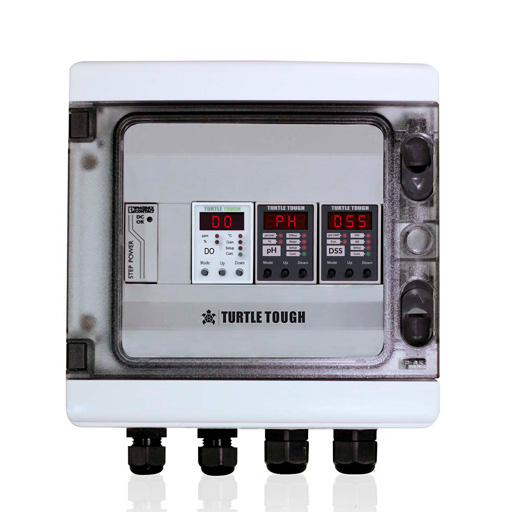
Extreme sensors call for extreme analysers and the Turtle Tough range has been designed with exactly that in mind. Whatever the application, we have a range of Smart analysers and control options to interface with your DSS sensors. Click to view our range...
Interface Hardware

We have a range of Digital Smart System accesories to interface, calibrate and communicate with your DSS sensors. Click to view our range...